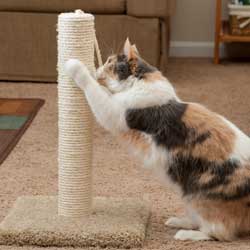











Training Your Cat to Use Scratching Posts
Scratching is a normal feline behavior. It provides exercise, stretches muscles, and allows cats to mark territory. Scratching also removes old layers from claws, though it does not sharpen them as many people believe.
Start Early for Best Results
Training is easiest when your cat is a kitten, starting when they are weaned. Older cats can learn too but may take longer if they were not previously conditioned. Patience, consistency, and gentle firmness are key.
Choose the Right Scratching Post
Experiment to find surfaces your cat prefers. Vertical posts should be tall enough for a full stretch and solid enough not to wobble. Many cats enjoy carpet-covered cat furniture with posts, barrels, and platforms for climbing, scratching, and napping.
Some cats prefer horizontal scratching surfaces. Sisal mats, cardboard boxes with catnip, or rough wood with bark can all be effective. Providing a variety encourages regular use.
Placement Matters
Place posts where your cat naturally wants to scratch. Near napping spots is ideal since cats often stretch and scratch after sleeping. Multiple posts throughout the house reinforce appropriate scratching behavior.
Encourage and Reward
Use catnip or dangling toys to attract your cat to posts or mats. Praise and affectionate touches let your cat know when they perform the desired behavior. Treats can also reinforce positive scratching habits.
Discourage Unwanted Scratching
If your cat scratches furniture, provide a firm but gentle correction such as a clap or authoritative voice to startle them. Immediately place your cat at their scratching post and praise them when they use it. Most cats learn quickly with this approach.
Training your cat to use scratching posts takes patience and consistency. Choose the right surfaces, place them strategically, use rewards, and provide multiple options around the home to support natural scratching instincts.