









Hydrangeas Awakening Naturally
As daylight increases and temperatures begin to warm, hydrangeas start shifting from winter dormancy into spring growth. Early spring is an ideal time to check soil moisture, assess winter damage, and prepare plants for the growing season—but it’s also a time when pruning mistakes can unintentionally remove flower buds, especially on varieties that bloom on old wood. Understanding the specific needs of each type ensures healthy growth and abundant blooms throughout the season.
Hydrangeas fall into six commonly grown groups—Bigleaf, Mountain, Oakleaf, Smooth, Panicle, and Climbing—and each behaves differently in spring. With thoughtful care and timing, it’s easy to support their natural growth cycle without sacrificing blossoms.
Identifying Your Hydrangea Before Leaves Emerge
Even before leaves appear, you can often determine which of the six main hydrangea types you have by examining buds, stems, bark, and plant structure:
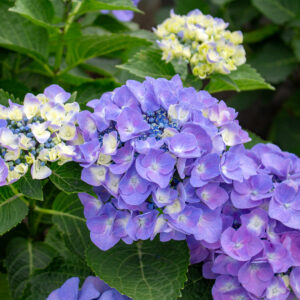
- Bigleaf Hydrangea (Hydrangea macrophylla): Large, rounded buds along stems; upright and arching growth; thin, soft stems. Old-wood bloomer—buds formed on last season’s growth.
- Mountain Hydrangea (Hydrangea serrata): Smaller, delicate rounded buds; thin, slightly wiry stems; low, spreading habit. Old-wood bloomer.
- Oakleaf Hydrangea (Hydrangea quercifolia): Small clustered buds; woody stems with peeling cinnamon-colored bark; upright branching with wide angles. Old-wood bloomer.
- Smooth Hydrangea (Hydrangea arborescens): Tiny, smooth buds along new stems; stems die back to the ground in winter; low, bushy growth. New-wood bloomer—flowers form on current season’s growth.
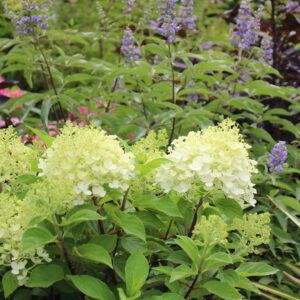
- Panicle Hydrangea (Hydrangea paniculata): Pointed or conical flower buds; woody, strong, upright stems; vase-shaped, upward-growing habit. New-wood bloomer.
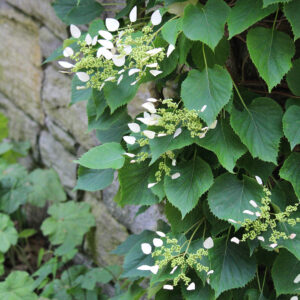
- Climbing Hydrangea (Hydrangea anomala subsp. petiolaris): Small clustered buds along vine-like stems; twining stems with aerial rootlets; trailing or climbing habit. Old-wood bloomer.
Tip: Gently scratch a stem—living tissue is green beneath, while dead wood is brown and dry. Old-wood bloomers will have visible flower buds from the previous season, while new-wood bloomers will not yet show prominent buds in early spring.
Early-Spring Care Guidelines
- Avoid Heavy Pruning of Old-Wood Bloomers
Bigleaf, Mountain, Oakleaf, and Climbing hydrangeas bloom on last year’s wood. Remove only dead or damaged branches in early spring to preserve flower buds. - Prune New-Wood Bloomers for Shape and Size
Smooth and Panicle hydrangeas bloom on new growth, so early-spring pruning helps maintain shape and encourages stronger blooms. Cut back stems by one-third to one-half if necessary. - Clean Up and Mulch
Remove winter debris from around the base of the plant. Apply a 2–3 inch layer of organic mulch, keeping it slightly away from the stems to prevent rot. Mulch helps retain soil moisture and insulates roots during lingering cold snaps. - Fertilization
Apply a balanced, slow-release fertilizer when buds begin to swell. For Bigleaf hydrangeas, a fertilizer higher in phosphorus can encourage better flower set. Avoid fertilizing too early, as this can promote leafy growth at the expense of blooms. - Watering
Early-spring moisture is crucial, especially as plants break dormancy. Ensure soil is consistently damp but well-draining. Avoid waterlogging, particularly in clay-heavy soils. - Sunlight Considerations
While hydrangeas prefer morning sun and afternoon shade, the exact exposure needs vary by type. Bigleaf and Mountain types benefit from partial shade, whereas Panicle and Smooth types tolerate full sun. - Monitor for Pests and Diseases
Check for overwintering pests, such as scale or spider mites, and prune out any infected stems. Good air circulation reduces fungal issues like powdery mildew.
By identifying your hydrangea type before leaf-out and following early-spring care guidelines, you can protect buds, encourage healthy growth, and enjoy a season full of blooms. Understanding whether your hydrangea blooms on old or new wood is key to timing pruning and fertilization correctly, ensuring that your garden thrives from spring into summer.