









Avoiding Common Late-Spring Shrub Mistakes
Let’s paint a picture: the vibrant early blooms in your garden are starting to fade, and your shrubs are busily pushing out fresh new growth. Late spring is an incredibly active and exciting time in our landscapes! While it might feel like the perfect moment to roll up our sleeves and get to work, some of our most well-intentioned habits can actually stress our plants and reduce their blooming potential.Understanding the science behind your shrubs’ seasonal transition empowers you to protect your eco-friendly garden and keep your plants thriving all summer long.
Why Late Spring Care Matters
Right now, your shrubs are shifting from relying on early-season energy reserves to fueling active growth. New leaves are forming quickly, and root systems are expanding deep into the warming soil. The steps we take today will directly influence their shape, vigor, and flower production for months to come. Sustainable gardening in late spring is really about stepping back, observing, and letting nature do its thing!
Common Mistakes to Avoid
Here are a few gentle course corrections to keep your landscape on track:
- Pruning at the Wrong Time: It’s so tempting to prune spring-flowering shrubs right now, but many varieties actually form next year’s buds shortly after their blossoms fade. Heavy trimming during this window acts like a botanical haircut, removing developing flowers before they can open! Instead, practice selective, eco-friendly thinning immediately after the bloom cycle ends.
- Overwatering or Inconsistent Watering: While our shrubs need steady moisture to thrive, late spring rains combined with daily irrigation can leave the soil overly wet. Waterlogged roots struggle to absorb vital oxygen, leading to yellowing leaves and slow growth. We recommend checking the soil moisture first. Deep, infrequent watering is a wonderful, sustainable practice that encourages much stronger, drought-resistant root systems than daily shallow watering.
- Fertilizing Too Aggressively: In the gardening world, more isn’t always better! High-nitrogen fertilizers applied in late spring often push out lush, leafy green growth at the expense of beautiful blooms. If your shrub seems to need a boost, reach for a balanced, organic, or slow-release fertilizer to nurture it naturally.
- Shearing into Tight Shapes: We know formal hedges look tidy, but constant shearing reduces crucial airflow and creates a dense outer shell with a sparse, unhealthy interior. Whenever possible, let your shrubs maintain their beautiful, natural form.
Quick Reference Guide
- Mistake: Heavy pruning late after the bloom window.
Better Approach: Prune promptly after flowering to protect next year’s buds. - Mistake: Daily shallow watering.
Better Approach: Water deeply and less often to encourage roots to grow deeper into the soil rather than staying near the surface. This results in stronger, more resilient plants that are better able to withstand heat and dry conditions. - Mistake: High-nitrogen feeding.
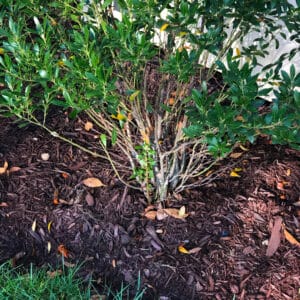
Better Approach: Use a balanced, organic slow-release fertilizer for steady growth. - Mistake: Piling mulch against stems.
Better Approach: Keep mulch a few inches away to prevent moisture trapping and rot.
Patience is a Gardener’s Best Tool
Sometimes late-spring growth can look a little wild or uneven. New growth often appears lighter in color and softer in texture because the leaves are still developing. As they mature, they typically deepen in color and become firmer and more resilient. Give your plants the time and space to fill out naturally before assuming there is a problem! Also, keep an eye out for minor environmental stress—like mild wilting during sudden temperature spikes or increased sun exposure—before making drastic changes to your routine.
A thriving, sustainable garden often requires us to do less, not more. With a little patience and gentle care, your shrubs will reward you with vibrant growth and beautiful blooms throughout the season. If you’re ever unsure about a specific plant or want expert advice on organic practices, our knowledgeable team at Strader’s Garden Center is always here to help you grow sustainably.